 Neus Flores
Berlin, Germany – The European Film Awards celebrated “Sentimental Value” as the best European film on Saturday January 17th 2026.


The European Film Academy revealed the winners of the 38th European Film Awards during a festive ceremony at the Haus der Kulturen der Welt in Berlin (Germany), welcoming over 1K international guests to celebrate the creativity, diversity, and artistic #excellence of European cinema.
The night’s most awarded film was SENTIMENTAL VALUE (Affeksjonsverdi), directed by Joachim Trier, which received six European Film Awards, including best European Film, European Director, European Screenwriter, European Actress (Renate Reinsve), European Actor (Stellan Skarsgård), and European Composer/Original Score (Hania Rani). Its success marked one of the most resounding triumphs in recent European Film Awards history.
The ceremony was broadcasted and livestreamed through 49 partners in 29 European countries, reflecting the current international resonance of European cinema. And for the first time, the European Film Awards took place more prominently within the global awards season, shortly after the Golden Globes and during the Oscar´s nomination voting period.
Spanish Women and Feminine Voices: A Night of Recognition
The European Film Awards 2026 also stood out for the strong presence and recognition of feminine creative voices, with Spanish women playing a particularly visible role across #key categories.
Spanish casting director Nadia Acimi, together with Luís Bértolo and María Rodrigo, received the European Casting Director Award for their work on the film SIRĀT, highlighting the essential creative #leadership of women behind the camera.

Also, in the craft categories, Laia Ateca won the European Production Designer Award, while Laia Casanovas was honoured with the European Sound Designer Award, underlining the decisive contribution of Spanish women to SIRĀT’s artistic identity.


The awards also celebrated female creativity across Europe, including Sabrina Krämer, who won European Costume Designer for SOUND OF FALLING, and Greta Scarano, whose film SIBLINGS (La Vita da Grandi) received the European Young Audience Award.
Together, these recognitions reflect a broader shift toward acknowledging women’s creative leadership across both artistic and technical disciplines.
A new generation of women in film — a path paved by Isabel Coixet and Carla Simón
The prominence of Spanish women at this year’s ceremony also reflects a wider transformation within Spanish cinema, driven by a new generation of filmmakers and creative professionals working with international visibility and confidence.
This evolution builds on the legacy of Isabel Coixet, one of Spain’s most influential and internationally recognised female directors. Over decades, Coixet has opened doors for feminine perspectives in European cinema through emotionally intimate storytelling, multilingual productions, and a sustained presence on the global festival circuit.
Her career has demonstrated that Spanish cinema can be deeply personal while remaining profoundly international—an approach now embraced by younger Spanish women working as an internationally acclaimed director like Carla Simón, as well as in writing, design, sound, and casting.
The European Film Awards 2026 thus not only celebrated individual achievements, but also acknowledged a lineage of #feminine creativity that continues to shape the future of European cinema.
Spanish Directors in Focus: Óliver Laxe and Albert Serra
Among the most prominent artistic voices recognised during the evening were Óliver Laxe and Albert Serra, two filmmakers whose nominated works underline the strength of contemporary European auteur cinema.
Óliver Laxe, nominated for European Director for his latest film SIRĀT, continues to build a singular cinematic body of work shaped by spiritual inquiry, extreme landscapes, and emotional #intensity.
Born in Paris in 1982 to Galician parents and educated in Barcelona, Laxe has established a distinct cinematic language that combines philosophical depth with visceral storytelling. As he himself likes to put it: `If the director is honest with his movies, he has already won´.
Sirāt, which follows a father and son crossing the Moroccan desert in search of a missing daughter, premiered at the Cannes Film Festival in May, where it received the Jury Prize.

Alongside Laxe, Albert Serra was honoured for his documentary AFTERNOONS OF SOLITUDE (Tardes de soledad), nominated for European Film and European Documentary.
Born in 1975 in Banyoles, Catalonia, Serra is known for his radically minimalist and intellectually demanding cinema. With a career marked by Cannes selections such as Honor de cavalleria, Birdsong, The Death of Louis XIV, and Liberté—winner of the Un Certain Regard Jury Prize—Serra continues to challenge cinematic conventions.
Afternoons of Solitude extends his distinctive approach into #documentary filmmaking, reaffirming his position as one of Europe’s most #uncompromising film directors. Or as he says: `You have to think like a #pioneer: whatever you do as an artist must feel like entering into a territory that nobody has ever entered before´.

Also as hosts of the best director award were The Javis, the young Spanish film directors on the rise who boldly declare: `Never betray yourself, and never create for an algorithm. Your first audience should always be yourself.´
Celebrating Excellence Across European Cinema
Beyond the major awards, the ceremony honoured outstanding achievements across all categories. FIUME O MORTE! by Igor Bezinović won European Documentary, ARCO by Ugo Bienvenu received European Animated Feature Film, and ON FALLING by Laura Carreira was awarded European Discovery – Prix FIPRESCI, while CITY OF POETS by Sara Rajaei won European Short Film – Prix Vimeo.
Honouring Lifetime Achievement and Global Impact
Previously announced honorary awards included the European Lifetime Achievement Award for Liv Ullmann, the European Achievement in World Cinema Award for Alice Rohrwacher, and the Eurimages International Co-Production Award for Maren Ade, Jonas Dornbach, and Janine Jackowski.
European broadcaster ARTE is marking these honours by making key works by Ullmann and Rohrwacher available on arte.tv.
Commitment to Diversity and Inclusion
All selections and awards were made in accordance with the Diversity & Inclusion Standards of the European Film Academy, reaffirming its commitment to representation, openness, and cultural dialogue.
The European Film Academy represents over 5,400 members and supports, connects, and promotes European filmmakers and their work, culminating annually in the European Award Season and the European Film Awards.
For more information, visit www.europeanfilmacademy.org
Article written by intercultural manager, communicator and filmmaker Neus Flores for the Washington Morning online news.
For more cultural articles published by Neus Flores, please click here.
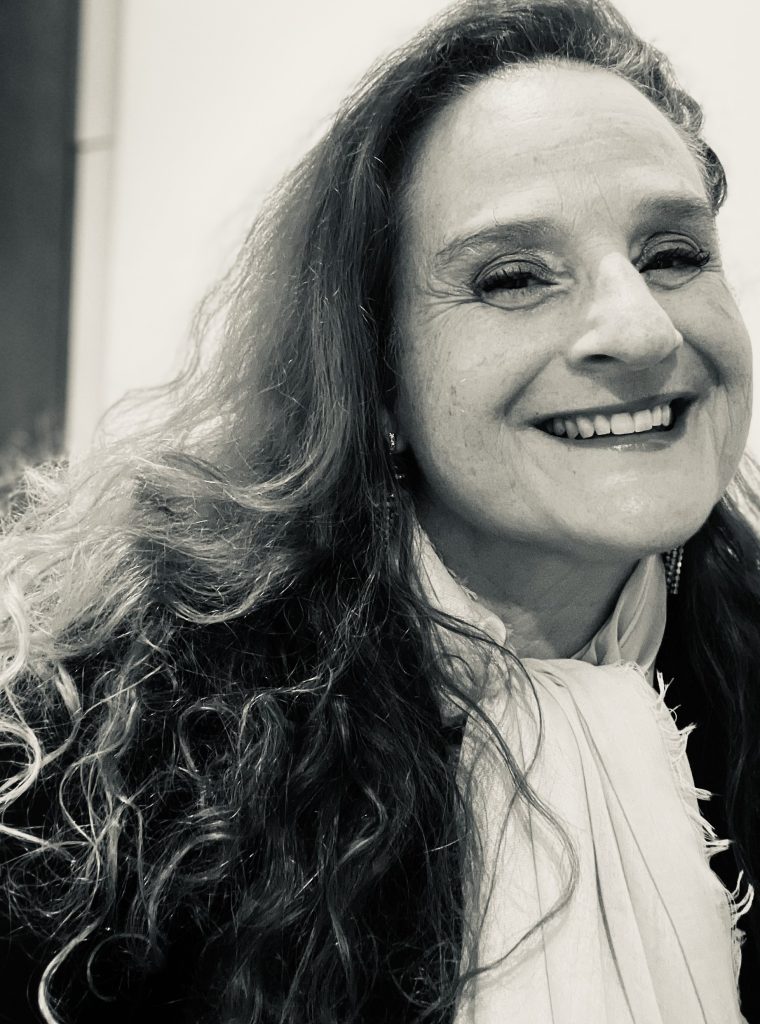
Intercultural manager, communicator and filmmaker Neus Flores


