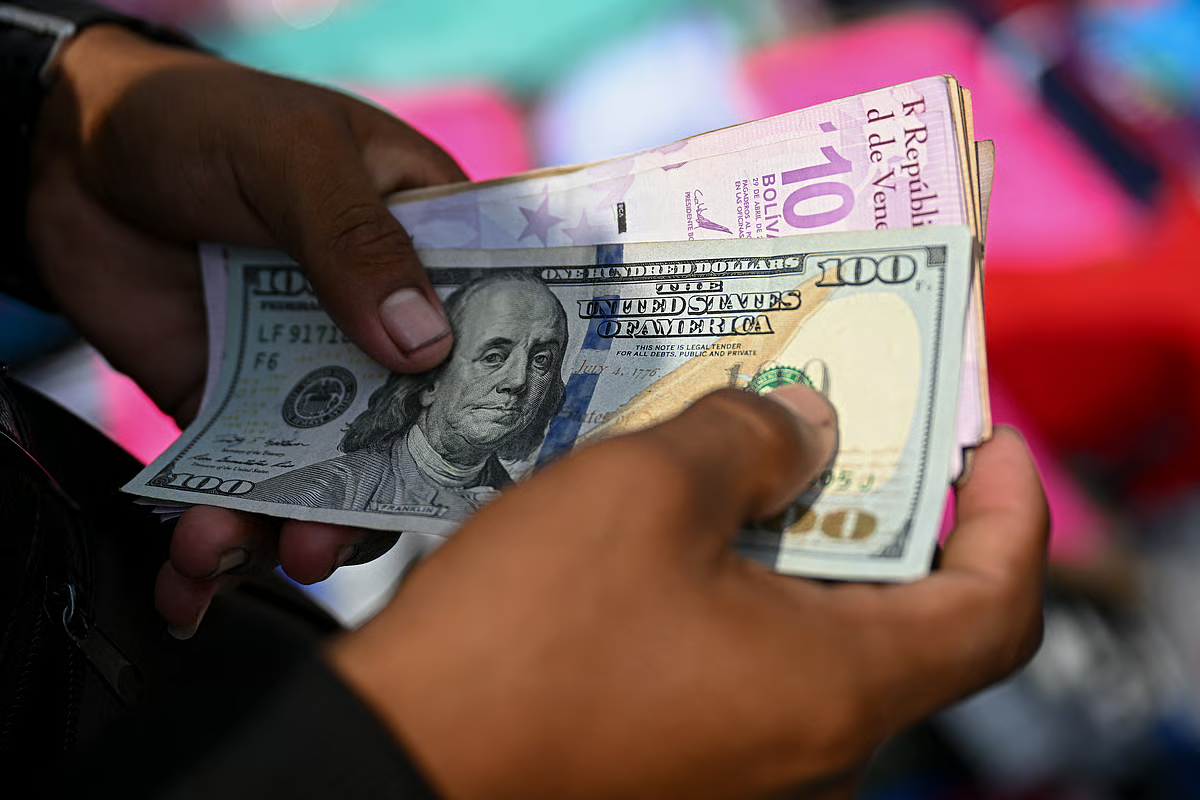
The U.S. dollar continues its downward trend, registering a 9.4% loss over the past year against a basket of foreign currencies, despite what appears on paper to be a robust American economy. This depreciation includes an almost 10% fall projected for 2025. This persistent weakening of the greenback, a trend observed since 2022, prompts questions about underlying market dynamics that defy conventional economic indicators.
Economists and currency traders are grappling with a curious disconnect. The U.S. economy recently expanded at an annualized rate of 4.4%, inflation is easing, and the stock market has climbed nearly 12% in the last twelve months. Such figures would typically bolster confidence in the dollar. However, analysts like Francesco Pesole from ING point to a sustained “Sell America” trade as a significant factor, suggesting that the seemingly strong economic performance isn’t translating into dollar strength.
The dollar’s performance against specific currencies further illustrates this puzzle. It has shed 8% of its value against the British pound over the last year, even as the UK’s annual economic growth struggles at a mere 1.3%. The contrast is even starker against the euro, with the dollar falling nearly 12% in the same period. Today, a dollar buys only 84 cents in Paris, according to these metrics. Equity markets in Europe seem to concur with currency traders; the Stoxx Europe 600 index has risen nearly 4% year-to-date, while the S&P 500, a key U.S. benchmark, is down 0.14%.
One major headwind for the dollar, despite the overall economic growth, is the labor market. While January’s job creation numbers were unexpectedly high, some economists anticipate a downward revision in the coming months, suggesting a potential statistical anomaly. Charts from Lawrence Werther and Brendan Stuart at Daiwa Capital Markets highlight rising unemployment and weak hiring, signaling a potential softening in the job market. This situation is particularly critical given that supporting the labor market is a central mandate of the U.S. Federal Reserve.
The prospect of a weakening job market could compel the Federal Reserve to implement further interest rate cuts to stimulate the economy. Although the Fed maintained interest rates at 3.5% in January, many Wall Street analysts foresee two additional cuts this year. Such actions would likely reduce the attractiveness of dollar assets, as they would yield less interest, prompting traders to seek opportunities elsewhere. Pesole noted that recent weeks have shown that improvements in the U.S. macroeconomic picture are insufficient to restore the dollar to its earlier January levels, indicating that the “mid-January ‘sell America’ episode” has inflicted lasting damage.
George Vessey from Convera echoed this sentiment, observing that the U.S. dollar index concluded last week in negative territory. He pointed to a volatile period marked by AI-driven equity concerns and conflicting macroeconomic signals regarding Fed policy. Vessey suggested that markets appear predisposed to react to weak or dovish U.S. data, with investors increasingly convinced that the Fed would respond aggressively to any signs of economic softness. This dynamic has eroded the dollar’s traditional role as a safe haven, according to Pesole, as confidence in its stability has not fully returned.



