 Josh Weiner
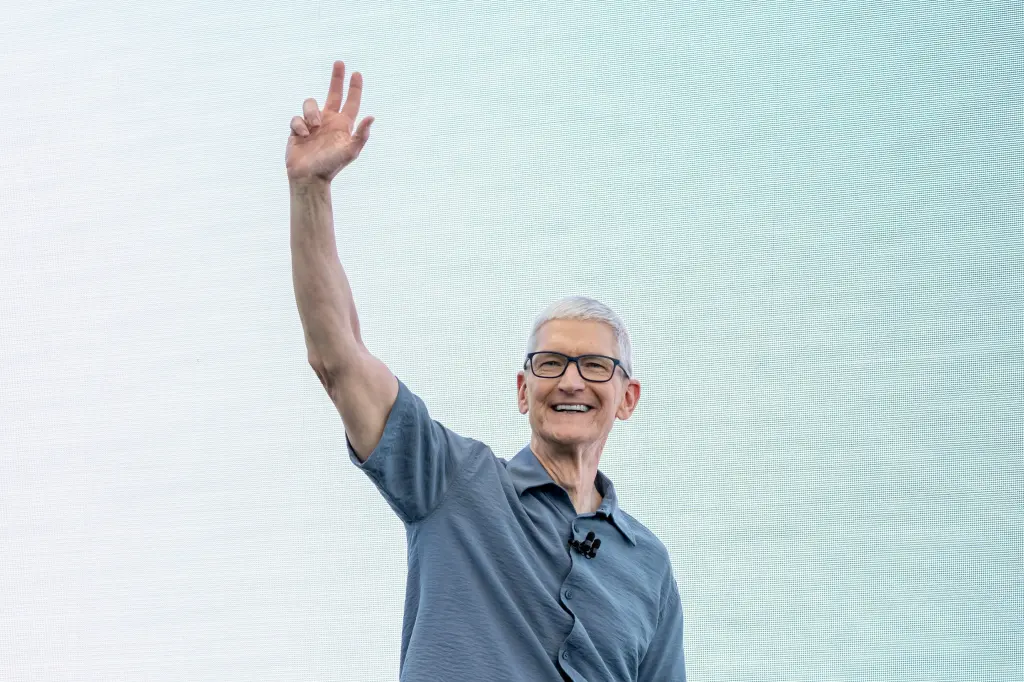
David Paul Morris—Bloomberg/Getty Images
When Fortune first profiled Tim Cook back in 2008, he was introduced as an “under-the-radar guy” who might someday succeed Steve Jobs, an “operations whiz” whose personality read as a “blank slate” to outsiders. Cook himself waved off the idea at the time: “Come on, replace Steve? No. He’s irreplaceable.”
Cook arrived at Apple in 1998 from Compaq, already a 16-year computer-industry veteran with 12 years at IBM behind him, brought in specifically to clean up what was, by most accounts, an atrocious state of manufacturing, distribution and supply chain operations. The turnaround was fast and dramatic: Apple had been managing inventory in terms of months of supply when Cook arrived; within a year he had the company measuring it by the hour. By 2008, AMR Research ranked Apple’s supply chain the best in the world, a direct result of Cook’s re-engineering.
Jobs stepped down as CEO in 2011 and died shortly after, handing Cook a company defined almost entirely by its founder’s singular, combustible genius. Six months into his tenure as CEO, Cook was already “in complete control,” according to Fortune’s reporting at the time, striking a balance that would define his entire run: he “consistently pays homage to the legacy of Jobs, but he doesn’t apologize for charting a new course.”
That new course looked nothing like Jobs’s volatile, mercurial leadership style. Cook brought a calm, methodical pragmatism instead, one an Apple executive summed up simply: “He never tried to be Steve. He tried to always be himself.” Under that steadier hand, Apple grew “richer, bigger, and more expansive in its ambitions,” transforming from a hardware company defined by its founder’s product instincts into a diversified giant whose services business, global retail footprint and disciplined supply chain became just as central to its identity as the iPhone itself.
That transformation culminated this year. Cook moved into the role of executive chairman of Apple’s board on September 1, 2026, handing the CEO title to John Ternus, the company’s longtime senior vice president of Hardware Engineering. It closes out a run that started with Cook positioned as merely the operational genius standing behind a visionary founder, and ended with him recognized as a distinct kind of leader in his own right, one who never tried to fill Jobs’s shoes and, in the process, built something that was unmistakably his own.




